

 WeChat

 Weibo
 Channel



CSR
CSR 2026-10-28
FIMAN and Frost and Sullivan Jointly Release 2026 Global Animal-Derived Collagen Industry White Paper
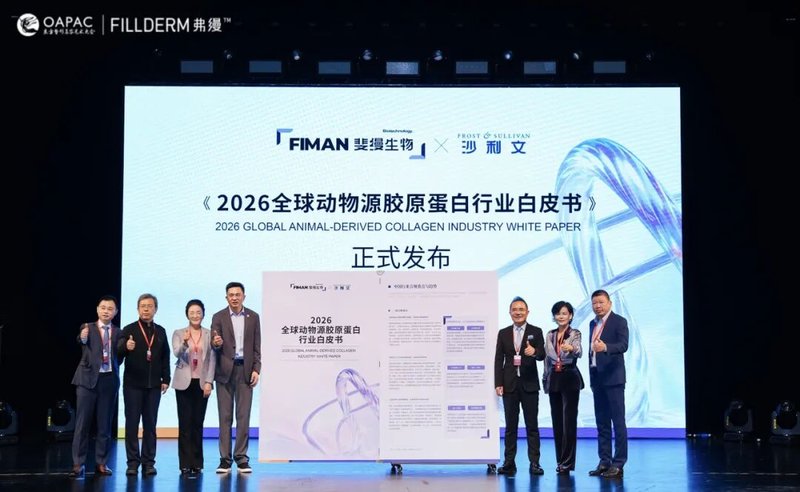
On October 27, at the 2026 Oriental Aesthetic Plastic Art Conference (OAPAC), Frost & Sullivan, a leading global consulting firm, and FIMAN jointly released the 2026 Global Animal-Derived Collagen Industry White Paper (the “White Paper”). The report examines the evolving scientific understanding of collagen—from a structural scaffold to a material with functional roles—alongside the industry value chain, market landscape and future trends. It offers insights for medical-aesthetics practitioners, clinicians and consumers, while highlighting, from an independent third-party perspective, China’s growing capacity for globally competitive innovation in the technically demanding field of bioactive collagen biomaterials.

Mao Hua, Senior Partner and Managing Director of Frost & Sullivan China, said in an interview: “The White Paper establishes a framework for evaluating the animal-derived collagen industry using verifiable and quantifiable criteria. Advances in technology and product development have enabled animal-derived collagen to evolve into a high-value biomaterial that can be manufactured at scale and tailored through material modification. As one of the world’s most dynamic collagen markets, China has developed an integrated animal-derived collagen value chain, from upstream raw-material management to extraction and purification, and a broad range of downstream applications. With evidence-based practice and standardization gaining momentum, China’s animal-derived collagen industry is well positioned to play an increasingly influential role in the global market.”
From Structural Support to Bioactive Function:
Animal-Derived Collagen Expands Its Applications Continuously
Population aging, growing demand for tissue repair and the evolution of medical-aesthetics consumption are jointly driving the continuous expansion of animal-derived collagen applications. The White Paper notes that, as a key component of the native extracellular matrix (ECM), animal-derived collagen is moving beyond its traditional role as a structural support material toward applications as a bioactive material involved in tissue repair. Its native structure can interact with cells and participate in repair and regeneration processes—an important scientific basis for the concept of bioactive collagen and a foundation for further evidence-based exploration in skin rejuvenation and tissue repair.
The global animal-derived collagen market is seeing three key shifts: broader applications, varied growth across segments and a move toward higher-value uses. China is becoming an increasingly important contributor to this transformation. In clinical medicine, applications such as wound repair, bone-tissue regeneration and soft-tissue reconstruction are expanding. In China’s retail market for injectable animal-derived collagen products used in medical aesthetics, market value is projected to rise from 29.79 billion RMB in 2023 to 95.35 billion RMB by 2030. Continued growth is expected as demand for injectable aesthetic treatments increases and clinical applications broaden.
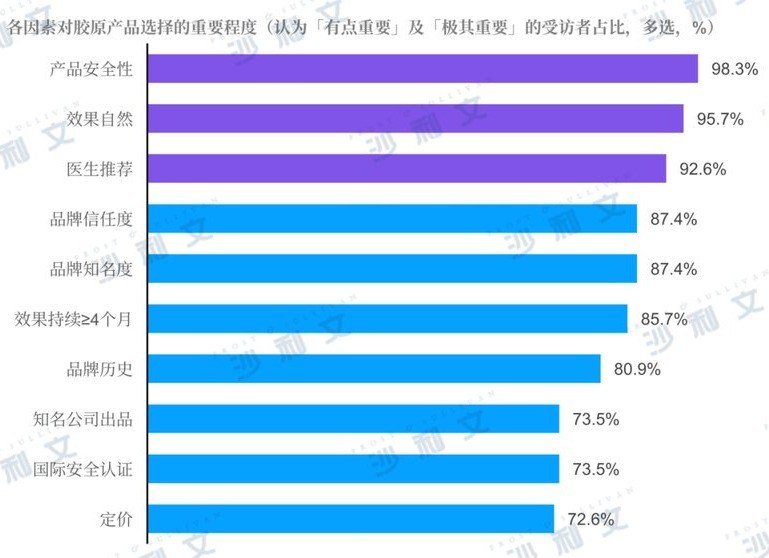
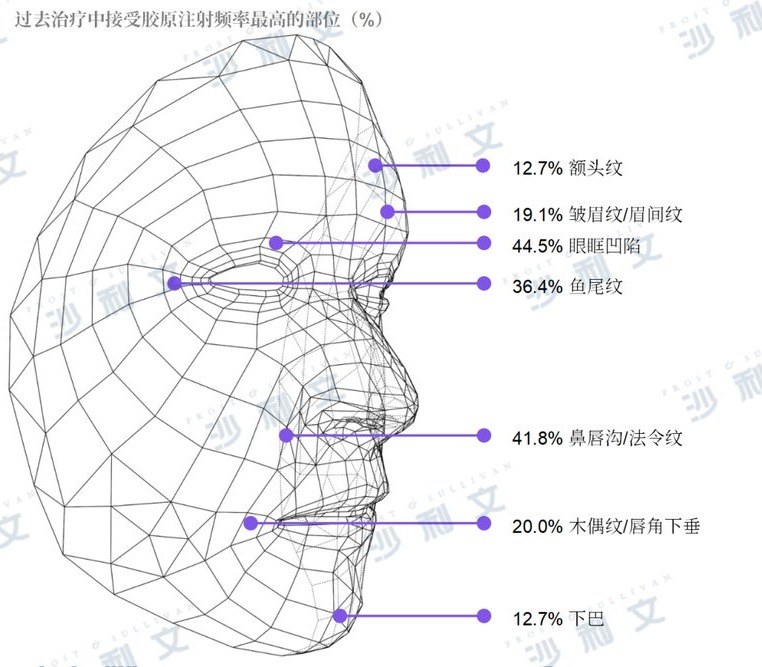
Diverse user needs are raising the bar for biomaterials. In medical aesthetics, priorities include natural-looking results and suitability for different anatomical tissue layers; in tissue repair, material stability, biocompatibility and accumulated clinical evidence are key considerations. Consumer research cited in the White Paper, based on 230 valid responses across 11 cities, reflects these priorities. Previous collagen-injection treatment areas were concentrated around the eyes and the nasolabial folds. Orbital hollowing was the most frequently reported area (44.5%), followed by nasolabial folds (41.8%) and crow’s feet (36.4%). When choosing products, 98.3% of respondents considered safety important or extremely important, 95.7% said the same of natural-looking results, and 92.6% of physician recommendations. Brand trust and brand awareness each scored 87.4%, compared with 72.6% for price.
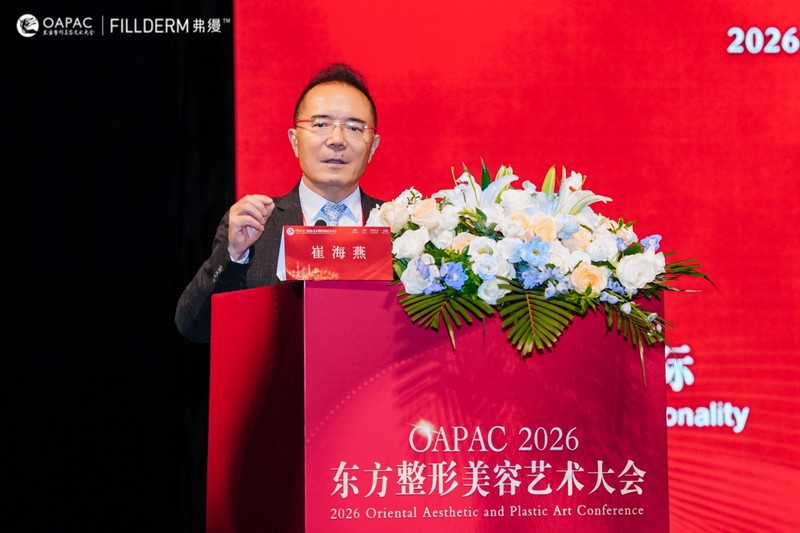
Professor Cui Haiyan, Director of the Institute of Aesthetic Plastic Surgery at Tongji University School of Medicine, said: “The release of the White Paper will help advance scientific understanding of collagen and broaden awareness across the medical-aesthetics industry. Safety and efficacy are baseline requirements. Building a credible and sustainable medical-aesthetics ecosystem requires collective effort from all stakeholders: starting with rigorous safety standards, developing industry standards and expert consensus, and fostering a healthy industry environment. These steps are essential to earning consumers’ trust over the long term.”
From End-to-End Quality Control to Original Innovation:
FIMAN’s Commitment to High-Quality Collagen
As regulatory requirements tighten worldwide and consumer awareness evolves, competition in the animal-derived collagen industry is shifting away from price and raw-material origin toward quality, safety and clinical evidence. As the White Paper notes, with the industry entering a new phase of technological innovation, the focus is moving beyond product availability to product quality and suitability for clinical applications.
Featured in the White Paper as a benchmark Chinese case, FIMAN has focused on bioactive collagen for more than two decades. Its end-to-end quality management system supports the development of high-quality collagen and provides a reference for industry practice. FIMAN is continuing to integrate capabilities across the value chain, from raw-material control and core technologies to product development and clinical translation:
- Raw materials
- FIMAN has established what it describes as China’s first medical-grade cattle production base and developed its own SIM-12 cattle line for medical applications. Electronic ear tags support digital traceability across the process, from breeding and vaccination to feed management and raw-material collection
- Research and development
- FIMAN has developed a suite of core technologies, including the SL15DP purification system, PET photo-controlled telopeptide removal, CollaSUS emulsification and controlled self-assembly
- Products and clinical use
- More than 3 million Fillderm products have been used in clinical practice, with the reported adverse-event rate below 0.03‰.

Chen Xinwei, General Manager of FIMAN, said in an interview: “What is truly valuable is not a product riding a passing trend, but quality, clinical performance and long-term safety that stand up to scrutiny. We are committed to quality through end-to-end control and to expanding what is possible through original innovation. We are developing applications for bioactive collagen across medical-aesthetic injections, skin repair and broader healthcare. Looking ahead, we hope to work with physicians and medical institutions to deepen understanding of the value of animal-derived collagen among consumers, as we pursue our vision: ‘a collagen brand of China, a pride of China to the world.’ As a company at the forefront of collagen innovation, we see this as both a responsibility and a contribution to a more standardized, quality-driven industry.”